FIMA 2026 enters its final stretch with a day focused on talent, the CAP and the major challenges of the sector
2026-02-13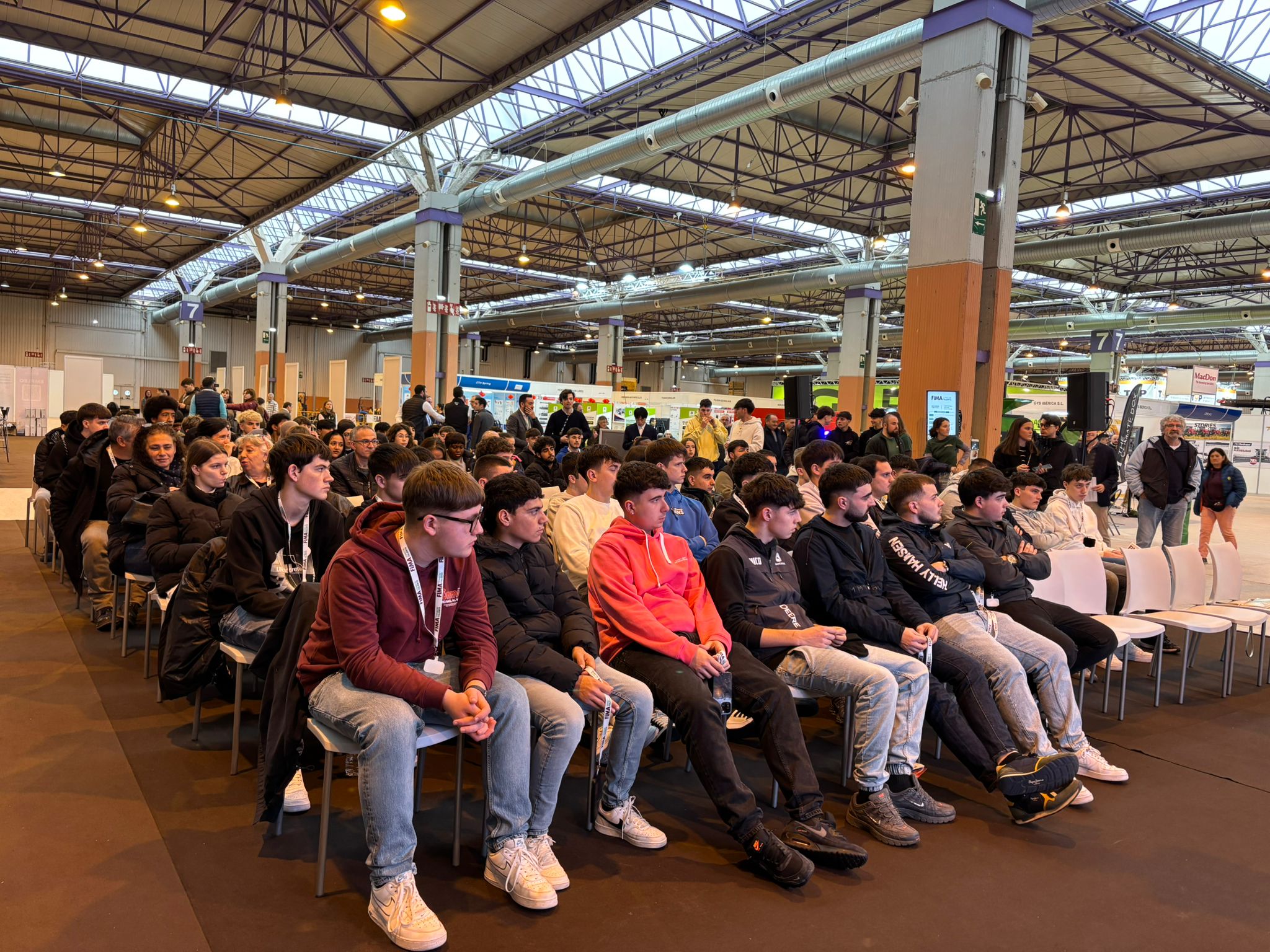
Comparte esta publicación


FIMA 2026 held today its fourth and penultimate day, featuring a programme of activities that once again highlighted the trade fair’s role as a forum for analysis, training and professional networking. Throughout the day, the nine exhibition halls and the Congress Centre of Feria de Zaragoza hosted institutional events, panel discussions, technical presentations and sector meetings that attracted a large number of professionals.
The day began in the Auditorium of the Congress Centre with the session ‘Analysis and perspectives on the CAP for the period 2028-2034’, organised by the Government of Aragon. This meeting served to analyse the challenges and opportunities posed by the future Common Agricultural Policy, in a context marked by sustainability, competitiveness and adaptation to new economic scenarios. The session was attended by directors-general from various autonomous communities, including the Basque Country, La Rioja, Asturias, Castile and León, and the Valencian Community, and encouraged the exchange of views and experiences among those present.
Talent Day
Another highlight was the celebration of Talent Day, promoted by Feria de Zaragoza in Hall 7. Its programme focused on training, employability and generational renewal in the agricultural sector. Activities included the financing workshop for young farmers organised by Caja Rural de Aragón, as well as the round table “FIMA Conecta Talento”, centred on professional opportunities and attracting new talent to the sector.
Technology and innovation once again played a leading role. At the FIMA TECH space in Hall 9, sessions were held such as “Precision Agriculture with Feet on the Ground”, organised by the National Association of Small Farmers (ANAP), along with John Deere’s presentation on the latest technological solutions to improve agricultural efficiency. Also at FIMA TECH, universities and sector organisations took part in the session “Digitalisation Technologies: Equipment Manufacturers’ Perspective”, offering a joint overview of advances in digitalisation and their practical application in the field.
Meanwhile, Ibercaja Banco organised the session “Smart Investment in High-Performance Irrigation” in the Premium Room of Hall 4, addressing the importance of financing and modernising irrigation systems.
Other thematic blocks: sustainability, soil and sector dialogue
The day’s programme also included sessions focused on sustainability and natural resource management. In Room 3 of the Congress Centre, Agrocultivate delivered the presentation “Soil Health and Its Connection with Organisms”, highlighting the importance of soil as a key element for sustainable agriculture.
In Hall 6, ANAGAN Correduría organised a Dialogue Panel with the participation of sector professionals, moderated by Chema Paraled, generating an engaging exchange of experiences on communication, innovation and the future of rural areas, followed by a professional networking meeting at the stand.
Sector challenges
The day concluded with the session “Current Challenges in Extensive Cattle Farming”, organised by the Young Farmers’ Agricultural Association (ASAJA) of Aragon in Room 1 of the Congress Centre, where the main difficulties and prospects of this strategic subsector were analysed. The programme also included various institutional meetings and working lunches, such as the Lunch of Regional Directors of Agriculture.
Tomorrow, on the final day of the trade fair, the programme will focus on family and the challenges faced by women in rural areas, among other activities.
Return